Trump notifies Congress of new war against Iran — CENTCOM third consecutive night of strikes — Explosions in Bandar Abbas and Kish Island — Trump tells Hewitt US to "take out Pickaxe Mountain," warns Iranians be ready — Trump tells Hewitt Iran to be hit hard Mon-Tue — Trump primetime address Thursday 9pm ET — IMO says Hormuz should be toll-free — CENTCOM confirms naval blockade enforcement begins Tuesday 20:00 GMT — Tasnim: several vessels targeted in Hormuz — Houthis claim Saudi Abha Airport strike — US Navy JMIC: naval blockade of all Iranian ports begins Tuesday July 14, 20:00 GMT — Iran FM Araghchi mocks Trump 20% fee: “we will be fair” — Houthis threaten Saudi “vital infrastructure” — Trump reinstates blockade, declares 20% cargo fee — PGSA declares Strait “unfeasible” — UK proscribes IRGC — CENTCOM releases sea drone strike video — US strikes hit Abadan, Nain, Sistan-Baluchestan — IRGC warning shots at 2 ships — 5th wave continues
President Donald Trump told conservative radio host Hugh Hewitt in an interview Monday evening that Iran “will be hit hard Monday and Tuesday,” signalling at least two more days of sustained US military operations. Trump separately announced on Truth Social that he will deliver a primetime address to the nation Thursday July 16 at 9pm ET. The International Maritime Organization (IMO) Council declared that Hormuz passage should remain “free of any tolls and charges” under international law, rebuking Trump’s 20% fee plan. The US Navy-led Joint Maritime Information Centre (JMIC) announced at 18:15 GMT that enforcement of President Trump’s reinstated blockade of all Iranian ports will begin Tuesday July 14 at 20:00 GMT, encompassing Iran’s entire southern coast including ports and oil terminals. The advisory warned that “any vessel suspected of entering or departing the blockaded area without authorisation is subject to interception, diversion and capture” and that “non-compliant vessels may be legally compelled with force.” CENTCOM separately confirmed at 19:30 GMT that its forces would enforce the blockade, noting it had redirected more than 140 compliant vessels, disabled nine non-compliant ships, and allowed over 50 commercial vessels supporting humanitarian aid to pass during the prior two-month blockade period (April 13 to June 18). Iran’s Tasnim news agency reported at ~19:35 GMT that several “violating” vessels were targeted in the Strait of Hormuz. Iran’s FM Araghchi responded by mocking Trump’s 20% cargo fee, posting that Iran has “always been the guardian of the Strait and will remain so forever,” adding “20% is of course too much. We will be fair.” The Houthis separately claimed to have targeted Saudi Arabia’s Abha International Airport with ballistic missiles and drones Monday evening, warning airlines against using Saudi airspace. New explosions in eastern Bandar Abbas triggered air defence activation at approximately 19:05 GMT. Iran condemned the Sanaa airport attack as a “clear violation of international law.” Earlier, President Trump escalated dramatically Monday afternoon, reinstating the US military blockade of Iranian ports on Truth Social and declaring the US will be known as “THE GUARDIAN OF THE HORMUZ STRAIT,” reimbursed at 20% on all cargo. Iran’s Persian Gulf Strait Authority countered by declaring the strait “currently un...
Trump notifies Congress of new war against Iran — CENTCOM third consecutive night of strikes, explodes Bandar Abbas & Kish Island — Trump warns "take out Pickaxe Mountain" — Trump tells Hewitt Iran to be hit hard Mon-Tue — Trump primetime address Thursday 9pm ET — IMO says Hormuz should be toll-free — CENTCOM confirms naval blockade from Tuesday 20:00 GMT — Tasnim: several vessels targeted in Hormuz — Houthis claim Saudi Abha Airport strike — US Navy JMIC: naval blockade of all Iranian ports begins Tuesday 20:00 GMT — Iran FM Araghchi mocks Trump 20% fee: we will be fair — Iran condemns Sanaa attack — Trump reinstates blockade, declares 20% cargo fee — Iran PGSA declares Strait unfeasible — Mokhber says Strait has irreplaceable strategic value — Iran unified command warns Gulf states — Iran FM Araghchi says Iran-Oman talks to continue — UK proscribes IRGC — Iran announces Hormuz corridor via London embassy, contradicts IRGC closure — Iran rejects IAEA
President Trump told conservative radio host Hugh Hewitt that Iran “will be hit hard Monday and Tuesday,” and separately announced a primetime address to the nation Thursday at 9pm ET. The IMO Council declared Hormuz passage should remain “free of any tolls and charges” under international law, rebuking the 20% fee plan. CENTCOM confirmed at 19:30 GMT Monday that its forces will enforce the reinstated US naval blockade of all Iranian ports beginning Tuesday July 14 at 20:00 GMT, saying it had redirected more than 140 compliant vessels during the prior two-month blockade period. Iran’s Tasnim news agency reported at ~19:35 GMT that several “violating” vessels were targeted in the Strait of Hormuz. The US Navy-led JMIC had earlier announced that enforcement of Trump’s reinstated blockade of Iran’s entire southern coast (ports and oil terminals) will begin Tuesday July 14 at 20:00 GMT. The advisory warned that vessels entering or departing the blockaded area without authorisation face interception, diversion or capture, and that non-compliant vessels may be legally compelled with force. Iran’s FM Araghchi responded by posting that Iran has “always been the guardian of the Strait and will remain so forever,” mocking Trump’s 20% cargo fee as “of course too much” and vowing to “be fair.” The Houthis separately claimed to have struck Saudi Arabia’s Abha International Airport with ballistic missiles and drones, warning airlines to avoid Saudi airspace, after earlier threatening to target Saudi “vital infrastructure” in retaliation for the Sanaa airport strike. Iran condemned the Sanaa attack as a “clear violation of international law.” Earlier, President Trump escalated dramatically Monday afternoon, reinstating the US military blockade of Iranian ports on Truth Social and declaring a 20% fee on all cargo shipped through the Strait of Hormuz, with the US to be known as “THE GUARDIAN OF THE HORMUZ STRAIT.” “We are reinstating THE IRANIAN BLOCKADE, so named because it is only stopping Iran’s ships or customers from entering or leaving,” Trump wrote, contradicting his own earlier insistence the strait would remain open. Iran’s Persian Gulf Str...
Iranian media reports explosions in Bandar Abbas and on Kish Island as CENTCOM carries out third consecutive night of strikes targeting southern Iran
Iranian state media reported fresh explosions in both Bandar Abbas and on Kish Island at approximately 21:26 UTC Monday evening, as US Central Command continued its third consecutive night of strikes against Iranian military targets. Kish Island, located 17km off the Iranian mainland in the Persian Gulf, hosts an airport and economic free zone. The blasts extend the geographic scope of US operations across Iran’s entire southern coastline, coming a day after CENTCOM confirmed sea drone strikes on Bandar Abbas Naval Base. The continued strikes precede the formal naval blockade scheduled to begin Tuesday at 20:00 GMT, as President Trump has vowed to hit Iran “hard Monday and Tuesday.”
Al Jazeera / Iranian MediaUS Central Command announces at 4:45pm ET it began third consecutive night of strikes against Iran at Trump's direction amid escalating operations
US Central Command announced Monday evening at 20:45 UTC (4:45pm ET) that it had begun the third consecutive night of strikes against Iran at President Donald Trump’s direction. “These strikes will continue imposing a heavy cost on Iranian forces and degrade their ability to attack innocent civilians and commercial shipping in the Strait of Hormuz,” CENTCOM said in a statement posted on X. The announcement came moments after Trump told radio host Hugh Hewitt that US forces would hit Iran “hard Monday and Tuesday” and that the US would “take out Pickaxe Mountain,” a deeply buried nuclear-related site near Natanz. The strikes mark an intensification of US combat operations beyond the fifth wave conducted since July 7, with CENTCOM now conducting multiple consecutive nights of sustained bombing across Iranian coastal and strategic targets.
The Guardian / CENTCOM on X • CBS NewsTrump tells Hugh Hewitt radio interview that US strikes against Iran will continue through Tuesday — says “it was a done deal and then they broke it”
President Donald Trump told conservative radio host Hugh Hewitt in an interview Monday evening that US military strikes against Iran would continue for the next two days. “They will be hit hard Monday and Tuesday,” Trump said, according to Hewitt’s summary of the conversation. Trump reiterated his claim that Iran had agreed to a deal before launching the drone attack on the M/V GFS Galaxy, saying “it was a done deal and then they broke it.” The comments suggest the White House is planning at least two more days of sustained military operations against Iranian targets, signalling that the current escalation wave may extend well beyond the fourth and fifth rounds already conducted since Jul 7. Hewitt reported the interview on social media.
The Guardian / Hugh HewittTrump announces primetime address to the nation on Thursday July 16 at 9pm ET (0100 GMT Friday) amid escalating US-Iran conflict
President Donald Trump announced on Truth Social that he will deliver a primetime address to the nation on Thursday evening at 9:00 p.m. Eastern Time (0100 GMT Friday). “President Trump will be making a Speech to the Nation on Thursday evening, at 9 P.M. Eastern,” the post said. The announcement comes as the US intensifies military operations against Iran, with Trump declaring a blockade, a 20% fee on Hormuz cargo, and promising continued strikes through Tuesday. The address is expected to outline the administration’s strategy for the Strait of Hormuz and next steps in the conflict, which has entered its most intense phase since the war began in February.
The Guardian / Trump Truth SocialInternational Maritime Organization says Strait of Hormuz passage should remain “free of any tolls and charges” under international law — rebukes Trump 20% fee plan
The International Maritime Organization (IMO) Council declared Monday that passage through the Strait of Hormuz “should remain free of any tolls and charges, in accordance with international law,” pushing back against President Trump’s announcement that the US will levy a 20% fee on all cargo transiting the strategic waterway. “The right of transit passage through straits used for international navigation should not be threatened, impeded, denied, hampered, impaired or suspended,” the IMO Council said in a statement. The IMO’s executive body, which includes 40 member nations including the United States, reaffirmed its commitment to protecting vital shipping lanes and defending freedom of navigation. The IMO also condemned attacks on civilian commercial ships in and around the strait and called for de-escalation, though it said it would wait for more details on the US plan. The statement underscores the broad international opposition to Trump’s unilateral fee on one of the world’s most critical maritime chokepoints.
IMO Council • The GuardianHouthis claim to have targeted Saudi Arabia’s Abha International Airport with ballistic missiles and drones — warn airlines against Saudi airspace
Yemen’s Iran-aligned Houthi movement claimed responsibility for an attack on Saudi Arabia’s Abha International Airport with “a number of ballistic missiles and drones,” warning “all airlines against flying through Saudi Arabian air space and urge them to take our warnings seriously.” The attack comes hours after Yemen’s Saudi-backed internationally recognised government struck the Houthi-controlled Sanaa International Airport runway to prevent an Iranian aircraft from landing. The Houthi political bureau had earlier threatened to target Saudi “vital infrastructure.” The Abha airport attack threatens to expand the conflict into a direct Saudi-Houthi front alongside the main US-Iran confrontation in the Gulf, as the Houthis have previously demonstrated the ability to strike deep into Saudi territory with ballistic missiles and drones during the Yemeni civil war.
Al Jazeera / Houthi statementIran’s IRNA reports new explosions in eastern Bandar Abbas; Tasnim news agency says air defences activated over the southern port city — cause unknown
Iran’s state news agency IRNA reported new explosions in eastern Bandar Abbas shortly after 19:00 UTC Monday evening, the latest in a series of blasts that have rocked the southern port city over the past 24 hours. Iran’s Tasnim news agency separately reported that air defences had been activated over Bandar Abbas, with sounds of explosions heard. The cause of the blasts remained unknown at time of reporting. Bandar Abbas, the capital of Hormozgan province, sits on the Strait of Hormuz and hosts a major IRGC naval base. Earlier Monday, CENTCOM confirmed that sea drones had struck a submarine and ship maintenance facility at Bandar Abbas Naval Base. The fresh explosions suggest continued US or allied strikes against remaining Iranian military infrastructure in the strategic coastal zone, or possibly Iranian air defence activity against incoming projectiles, as the 5th wave of US operations continues.
Al Jazeera / IRNA / TasnimCENTCOM confirms its forces will enforce the reinstated US naval blockade of all Iranian ports beginning Tuesday July 14 at 20:00 GMT — says blockade resumes on 11th anniversary of JCPOA signing
US Central Command confirmed Monday evening that its forces would enforce the reimposed US naval blockade of all Iranian ports and coastal areas, set to begin at 20:00 GMT on July 14 — the 11th anniversary of the signing of the JCPOA nuclear deal in Vienna in 2015. “CENTCOM forces will enforce the blockade against vessels transiting to or from Iranian ports and coastal areas,” the command said in a statement on social media. “The US military continues to support traffic flow through regional waters for all vessels not violating the blockade.” CENTCOM noted that during the prior blockade period (April 13 to June 18), its forces had redirected more than 140 compliant vessels, disabled nine non-compliant ships, and allowed over 50 commercial vessels supporting humanitarian aid to pass through. The blockade confirmation comes after the US Navy-led JMIC issued an advisory earlier Monday announcing the enforcement timeline, and as Iran’s Tasnim news agency reported that several “violating” vessels had been targeted in the Strait of Hormuz. The blockade covers the entirety of Iran’s southern coast, including all Iranian ports and oil terminals.
Al Jazeera / CENTCOM on XIran’s Tasnim news agency reports that several “violating” vessels were targeted in the Strait of Hormuz — Iran FM Araghchi reaffirms “guardian forever” stance
Iran’s semi-official Tasnim news agency reported Monday evening that several “violating” vessels were targeted in the Strait of Hormuz, without providing specific details on the number of ships involved or the nature of the attacks. The report came as Iran’s Foreign Minister Abbas Araghchi reiterated that Iran has “always been the guardian of the strait and will remain so forever,” directly challenging President Trump’s declaration that the US would be the “GUARDIAN OF THE HORMUZ STRAIT.” The Tasnim report follows the IRGC’s earlier claim that it had fired warning shots at two ships attempting to cross the strait illegally on Monday, and the IRGC navy’s claim that it had halted two vessels and disabled their systems overnight. The continued interdiction operations demonstrate Iran’s ongoing refusal to accept US management of the waterway, even as CENTCOM prepares to enforce the reinstated blockade of all Iranian ports from Tuesday evening.
Al Jazeera / TasnimUS Navy-led JMIC says enforcement of naval blockade of all Iranian ports will begin Tuesday July 14 at 20:00 GMT — covers entire southern coast including ports and oil terminals
The US Navy-led Joint Maritime Information Centre (JMIC) issued an advisory stating that the blockade of all Iranian ports and coastal areas announced by Trump earlier Monday will be enforced from 20:00 GMT on July 14. The blockade encompasses “the entirety of Iran’s southern coast, including all Iranian ports and oil terminals.” JMIC said the measure will not impede neutral transit through the Strait of Hormuz travelling to or from non-Iranian destinations, and humanitarian shipments will be permitted pending inspections. “Any vessel suspected of entering or departing the blockaded area without authorisation is subject to interception, diversion and capture. Non-compliant vessels may be legally compelled with force,” the advisory warned. The Guardian noted that “it remains unclear in practical terms how easy it would be for the navy to do this,” given Iran’s continued threat to challenge US control of the strait. The IRGC responded by threatening to challenge any US move to control the waterway, with spokesperson Hossein Mohebi saying Washington had “seriously endangered the security of the world’s oil and gas supply and must be held accountable.”
The Guardian • Al Jazeera • APIran’s FM Araghchi says Iran has “always been the guardian of the Strait and will remain so forever,” mocks Trump’s 20% cargo fee as “of course too much” — says “we will be fair”
Iran’s Foreign Minister Abbas Araghchi responded to President Trump’s declaration of a 20% fee on Strait of Hormuz cargoes by posting on X that “POTUS is absolutely right. Whoever provides secure and safe passage of commercial vessels through the Strait of Hormuz should be compensated for this service.” In a sarcastic rebuttal, Araghchi added that “20% is of course too much. We will be fair,” before declaring that Iran has “always been the guardian of the Strait and will remain so forever.” The remark underscores the widening gap between US and Iranian positions, with both sides now claiming to be the legitimate manager of the strategic waterway. Araghchi’s taunt came as the US Navy formalised the blockade enforcement timeline for Tuesday evening GMT.
Al Jazeera / Araghchi on XHouthi political bureau member Mohammad al-Bukhaiti says group will target Saudi Arabia’s “vital infrastructure” in retaliation for Sanaa airport strike
Mohammad al-Bukhaiti, a political bureau member of the Iran-aligned Houthi movement, said the group will target Saudi Arabia’s “vital infrastructure” in retaliation for the airstrike on Sanaa International Airport runway earlier Monday, according to local media. The threat came hours after Yemen’s Saudi-backed internationally recognised government struck the Houthi-controlled airport to prevent an Iranian aircraft from landing. Iran’s Foreign Ministry separately condemned the Sanaa attack as a “clear violation of international law and the United Nations Charter.” The Houthi threat threatens to open a new front in the widening regional conflict, as the group already controls large portions of Yemen and has previously used ballistic missiles and drones to strike deep into Saudi territory during the years-long Yemeni civil war.
Al Jazeera / Houthi mediaIran’s Foreign Ministry condemns attack on Sanaa International Airport as “clear violation of international law and the United Nations Charter”
Iran’s Foreign Ministry spokesman Esmaeil Baghaei condemned the airstrike on Sanaa International Airport earlier Monday, calling it a “clear violation of international law and the United Nations Charter” that showed “disrespect for Yemen’s national sovereignty and territorial integrity.” The Yemeni government earlier said it struck the Houthi-controlled airport to prevent an Iranian aircraft from landing. Separately, a Saudi-led coalition spokesman said it intercepted ballistic missiles launched by the Houthis towards southern Saudi Arabia, adding to the cycle of escalation between the Tehran-backed group and the Saudi-led coalition.
Al Jazeera / Iran FMYemen’s civil aviation authority orders closure of all airports to air traffic until further notice after Sanaa runway strike
Yemen’s civil aviation authority ordered the closure of all airports to air traffic until further notice, following the government’s airstrike on Sanaa International Airport runway that prevented an Iranian aircraft carrying a Houthi delegation from landing. The Yemeni government said the Houthi militia had “prevented Yemeni national aircraft from landing at the capital’s airport, Sanaa, and insisted that the Iranian aircraft violate Yemeni airspace. Therefore, the airport runway was targeted.” A correspondent reported that a similar attempt by the same Iranian aircraft to land at Sanaa two weeks ago was met by two fighter jets that attempted to intercept it but failed. The Houthi-aligned Sanaa government is expected to respond.
Al Jazeera / Yemen Civil AviationWhite House statement quotes Trump vowing to “hit them very hard” after accusing Iran of violating interim agreement — Iran’s unified command responds by warning US against Hormuz interference
President Trump accused Iran of violating the interim MoU agreement in a White House statement, saying “It was a done deal and then they broke it. They always break it. We’ve had 10 deals with these people — and so we’re just going to hit them very hard.” The statement added that Iran is “a bad group of people” and the US military would continue to degrade Iranian capabilities. Separately, Iran’s Khatam al-Anbiya Central Headquarters spokesman Ebrahim Zolfaghari declared that Iran “does not and will not allow the United States to interfere in the management of the Strait of Hormuz,” warning that “any cooperation with the United States and logistical support for that country’s aggressor army will be considered a war against Iran’s sovereignty and national security,” and that the war could “engulf all the countries in the region.” The duelling statements underscore the complete collapse of diplomatic communications as both sides escalate rhetoric.
White House / Rapid Response on X • Al JazeeraYemen’s internationally recognised government strikes Sanaa International Airport runway to prevent Iranian plane carrying Houthi delegation from landing
Yemen’s military said it struck the runway at Sanaa International Airport to prevent an Iranian aircraft from landing, accusing Tehran of insisting on violating Yemeni airspace. The Iran-aligned Houthi movement accused Saudi Arabia of launching the airstrikes and vowed retaliation. The Iranian plane was reportedly carrying a Houthi delegation returning from the funeral of late Supreme Leader Khamenei in Tehran, as well as medical patients and stranded citizens. Yemen’s defence ministry said it had tried to convince the Houthi delegation to board a Yemenia flight instead. The incident underscores Iran’s deepening entanglement in regional proxy conflicts alongside the main US-Iran confrontation in the Gulf.
AP • ReutersMaritime analyst says more vessels transiting Iranian Hormuz route than US-backed southern path — 26 ships used each of Iranian route and “dark” mode vs 5 on US southern route
Maritime security analyst Dimitris Maniatis told Al Jazeera that over the past three days, 26 commercial vessels transited Iran’s declared route through the Strait of Hormuz, another 26 “went dark” with electronic tracking systems turned off, and only five vessels chose the US military-backed southern route hugging Oman’s coast. “It’s obvious that the Strait of Hormuz is operating under a parallel and competing transit system, rather than a unified international maritime regime,” Maniatis said. He noted that the Japanese government managed to reach an agreement with Iran to secure the exit of seven Japanese vessels that had been trapped in the strait. The data underscores the fragmentation of Hormuz governance, with neither the US nor Iran able to assert exclusive control over the strategic waterway through which 20% of global oil and gas normally flows.
Al Jazeera / Dimitris ManiatisTrump says US will become the “guardian angel of the strait” and “get paid a lot of money” for controlling Strait of Hormuz — demands wealthy nations reimburse US
President Donald Trump told Fox News in a phone interview Monday that the United States will take over the Strait of Hormuz and should be reimbursed for controlling the vital waterway. “We’re going to keep the strait, and we’ll probably run it. We’ll become the guardian of the strait. Maybe we’ll call it the guardian angel of the strait, and we should be reimbursed for that,” Trump said. “We’re going to get paid for guarding it — a lot of money. We’re going to be reimbursed because the other nations are very wealthy. They’re on our side and we can’t be expected to do that for nothing.” The remarks came as parallel transit systems operate in the strait — one Iranian-backed, one US-backed — and as the IRGC continues to assert its own closure declaration by firing warning shots at vessels. Trump’s comments signal a potential long-term US military and economic commitment to the strait, far beyond the current campaign of degrading Iranian military capability.
The Guardian / Fox News • Al JazeeraUS strike on military base in Nain, Isfahan province kills at least 1, wounds 7 — expands US campaign into central Iran
The deputy governor of Iran’s central Isfahan province confirmed that a US attack on a military base in the city of Nain killed at least one person and wounded seven, according to Iranian state media. The strike marks a significant geographic expansion of US operations deep into central Iran, hundreds of kilometres from the coastal Hormuz zone where previous waves had been concentrated. Isfahan province is home to key Iranian military and nuclear infrastructure, including the Isfahan nuclear research complex and uranium conversion facility. It is the second reported fatality in Iran on Monday, after a US strike on an agricultural water pumping station in Mahshahr, Khuzestan killed a security guard and wounded four earlier in the day.
Al Jazeera / IRNA • Hindustan TimesMore blasts heard around Bandar Abbas and Qeshm Island in apparent 5th wave of US strikes — no civilian casualties reported
Iran’s Mehr news agency reported fresh explosions near the southern port city of Bandar Abbas and Qeshm Island on Monday morning, citing local news sources and residents. Iranian officials stated there were no civilian casualties and no damage to residential or commercial infrastructure. The blasts mark a continued US military presence in the Strait of Hormuz region after CENTCOM completed its fourth wave at 02:43 UTC. Qeshm Island, which sits on the strait, is home to an underground IRGC “missile city” and has been repeatedly targeted in previous waves. Mehr quoted Iranian sources saying that “over the past few nights, American terrorist forces have carried out attacks on the southern coastline of the country.” The fresh blasts constitute what analysts are describing as a potential fifth wave of US strikes, as the White House remains committed to degrading Iran’s ability to threaten commercial shipping.
Al Jazeera / Mehr • NY Post • MoneycontrolIran demands Oman mediate Hormuz — hours after Iranian drones struck Omani port of Duqm and Musandam, killing one expatriate worker
Iran’s Foreign Ministry spokesman Esmail Baghaei told reporters Monday that Iran is trying to agree a joint mechanism with Oman for managing the Strait of Hormuz, but claimed US pressure on Oman is hindering those efforts. The claim comes despite Iran having struck Omani infrastructure (Port of Duqm, Musandam enclave) with drones during its Jul 11–12 retaliation volley, killing an expatriate worker and wounding others — actions that contradict Tehrans stated desire for Omani mediation. Baghaei also reiterated Iran will not implement MoU commitments, and will not permit IAEA inspections of nuclear sites bombed in 2025. Oman had been mediating a two-corridor proposal for the strait, but talks in Muscat between Iranian FM Araghchi and Omani officials on Saturday failed.
The Guardian • The National • AP / BaghaeiIran’s army claims air defenses shot down US-made Lucas suicide drone over southern port city of Bandar Abbas
Iran’s military announced it had shot down a US-manufactured “Lucas” one-way attack drone over the southern port city of Bandar Abbas, according to the Tasnim news agency. The army said the drone was “accurately hit and shot down” by Iranian air defenses and released video footage it said showed a surface-to-air missile intercepting the drone. The claim comes as the US and Iran continue the fourth wave of tit-for-tat strikes, with US aircraft and naval vessels operating in and around the Strait of Hormuz. Iran International also reported the military had released video of the interception. The downing, if confirmed, marks the first successful Iranian shootdown of a US unmanned aerial system in this latest round of hostilities.
News18 / Tasnim • Iran International • Al JazeeraGulf and Jordanian air defences busy engaging “hostile aerial targets” as Iran continues retaliatory strikes through morning
Air defence systems across the Gulf Cooperation Council countries and Jordan remained active through Monday morning, reporting sustained interception operations against Iranian projectiles. Kuwait’s military confirmed it was engaging “hostile aerial targets” in Kuwaiti airspace, instructing residents not to panic at the sound of explosions. Jordan said it intercepted at least four Iranian missiles, with debris falling in several locations but no casualties reported. Bahrain activated sirens for a third time, with the Interior Ministry advising residents to stay indoors. The sustained air defence activity underscores the breadth of Iran’s retaliatory campaign, which has now targeted every GCC state except Saudi Arabia across four phases of the IRGC’s “eye-for-an-eye” operation.
Al JazeeraBahrain activates air raid sirens for third time in 12 hours as Iran continues retaliatory strikes
Bahrain’s Interior Ministry activated national alarm sirens for a third time on Monday, instructing citizens and residents to “remain calm and head to the nearest safe location.” The repeated alerts reflect the sustained Iranian missile and drone threat to the island nation hosting the US Navy’s 5th Fleet, as the IRGC announced it had launched a fifth phase of retaliation targeting installations in Juffair, Bahrain.
Al JazeeraIRGC announces fifth phase of retaliation: says it destroyed FPS radar and vessel detection radar in Oman, hit installations in Juffair, Bahrain
Iran’s IRGC announced the fifth phase of its “eye-for-an-eye” operation, claiming missile and drone strikes targeted “installations and infrastructure of the aggressive US army” in Juffair, Bahrain, and destroyed the FPS long-range aerial radar and vessel detection radar in Oman. The IRGC warned that “the only way to open the Strait of Hormuz to vessel traffic is to end the interventions of the aggressive US military” and that “continuing these interventions will lead to greater incidents in the world’s oil and gas sector.” Claims could not be independently verified.
Al JazeeraIRGC claims fourth phase of retaliation hit US HIMARS launchers in Kuwait — says set fire to missile launchers and warehouses
Iran’s IRGC claimed the fourth phase of its “eye-for-an-eye” operations targeted a US surface-to-surface missile base in Kuwait, saying it “set fire to two HIMARS missile launchers and missile-packed warehouses, completely destroying them.” Kuwait’s army separately confirmed it was engaging “hostile aerial targets” in Kuwaiti airspace. The claims could not be independently verified. The fourth and fifth phases mark a significant acceleration in Iran’s retaliatory campaign.
Al JazeeraAir raid sirens sound across Bahrain as Iran fires retaliatory ballistic missiles at US 5th Fleet host nation
Air raid sirens were activated across Bahrain early Monday, with the Ministry of Interior instructing citizens and residents to “remain calm and head to the nearest safe place.” Iran fired several ballistic missiles toward the island nation, which hosts the US Navy’s 5th Fleet. Three Iranian missiles targeting Bahrain were intercepted by US and Bahrain air defense forces. The alert marks a significant escalation as Iran retaliates for the fourth consecutive night of US strikes against targets across southern and central Iran. The attack follows similar Iranian barrages earlier in the week that had targeted Bahrain, Kuwait, Qatar, Oman and Jordan.
Hindustan Times / AFP • The GuardianUS strikes hit 8 locations across Iran in expanded fourth wave, US official says
A US official told media that the latest round of American strikes hit 8 locations across Iran, continuing the fourth wave of operations ordered by President Trump. The strikes represent a significant geographic expansion from previous waves, which had been concentrated primarily in Iran’s coastal Hormozgan province. Targets now include sites in Khuzestan, Markazi, Lorestan and Hormozgan provinces, spanning from the Persian Gulf coast to areas 250 km southwest of Tehran. The expansion signals the US military’s growing confidence in striking deeper into Iranian territory as the tit-for-tat cycle of violence enters its fifth day.
Hindustan Times / US OfficialAround 20 commercial vessels transit Strait of Hormuz in 24 hours with US coordination, Axios reports
Around 20 commercial vessels transited the Strait of Hormuz over the past 24 hours in coordination with the US military, Axios reported citing a US official. Several other ships also passed through without direct US coordination. The transit numbers represent a dramatic drop from pre-war levels of approximately 110 ships per day, but demonstrate that some commercial traffic continues despite Iran’s declaration that the waterway is closed. The US maintains a naval presence in the strait to enforce freedom of navigation since the IRGC declared the waterway closed on July 12.
India Today / AxiosOnly 6 vessels transited Strait of Hormuz on Sunday, lowest in 5 weeks, Kpler data shows
Only six vessels transited the Strait of Hormuz on Sunday, ship-tracking data from Kpler showed — the lowest number in five weeks. Tankers that exited included the Very Large Crude Carrier Humanity laden with 2 million barrels of Iranian oil and the Capetan Andreas carrying ~500,000 barrels of Kuwaiti oil products. Three empty tankers entered the Gulf to load oil. Most vessels switched off transponders when crossing the strait. No LNG tankers were visible on tracking data over the weekend. The six-vessel day compares with pre-war averages of approximately 110 ships per day and underscores how renewed hostilities have all but halted commercial traffic through the strategic waterway.
The Independent / KplerKuwait confirms three border centres and offshore oil drilling platform attacked by Iranian drone — one worker wounded
Kuwait’s military confirmed that three border centres in the north of the country and an offshore oil drilling platform came under attack from Iranian drones on Sunday, causing “material damage” and wounding one worker. The Kuwait Defence Ministry said the attacks caused damage to three land border posts. The Iranian IRGC claimed responsibility, saying it targeted US HIMARS launchers in Kuwait. The attack marks a broadening of Iran’s retaliatory strikes against Gulf states hosting US military assets as the conflict enters its most intense phase since the war began in February.
The Guardian • Al JazeeraUS conducts new round of strikes on Iranian targets — hits air defense systems and IRGC small boats around Strait of Hormuz
A US official told ABC News that the United States conducted a new round of strikes on Iranian targets on Sunday afternoon, targeting Iranian air defense systems and IRGC small boats around the Strait of Hormuz. The strikes were intended to further degrade Iran’s ability to target commercial shipping, according to the official, who said no US troops were wounded in the attacks. The fresh salvo comes after CENTCOM had declared the third round complete, suggesting the US is now in a fourth or continuous strike posture against remaining Iranian military infrastructure in the strategic waterway. The strikes mark the fourth consecutive day of US kinetic operations against Iran and the second full day since the IRGC struck the M/V GFS Galaxy container ship and declared the Strait of Hormuz closed.
ABC NewsTrump calls Iran “evil and sick” on NBC’s Meet the Press — says “we bombed the hell out of them last night”
President Donald Trump told NBC’s Kristen Welker on Meet the Press that Iran is “very, very evil and sick people” and that the US “bombed the hell out of them last night.” Trump reiterated his claim that a deal had been reached with Iran hours before the IRGC struck the M/V GFS Galaxy: “They agreed to a deal yesterday — a perfect deal for us, no nuclear, no this, no that, no nothing, they gave up everything — and then after that, they left the room, and then within an hour they launched a drone at a ship.” The interview marks Trump’s second Sunday morning talk show appearance in as many hours, following his earlier CNN State of the Union interview where he told Jake Tapper the US “hit them very hard last night.” The dual media blitz underscores the administration’s effort to frame the escalating conflict as a response to Iranian perfidy while signalling continued willingness to “decimate” Iranian military capability.
The Independent / NBC Meet the PressUS strikes on Farur Island kill telecommunication official, wound two others near Bandar Lengeh
Mehr news agency reported that US strikes on Farur Island, near the southern Iranian port city of Bandar Lengeh in Hormozgan province, killed a telecommunication official and wounded two others. The island sits in the Persian Gulf approximately 20 km off Iran’s southern coast. The casualties bring the total confirmed death toll from the third wave of US strikes to an estimated 21, with more than 100 wounded across four days of renewed hostilities.
News18 / Mehr • Iran InternationalUN Secretary-General Guterres warns of “catastrophic consequences” if US-Iran strikes continue — calls for immediate halt
UN Secretary-General Antonio Guterres called for an immediate halt to the escalating attacks across the Gulf, saying he was “deeply concerned” by US attacks on Iran and Iranian attacks on targets in neighbouring countries. “These attacks must all stop,” Guterres wrote on X. He warned that a return to full-scale war would be catastrophic for the region and the entire world, and called for the US and Iran to settle their differences through diplomacy. The intervention from the UN’s top diplomat underscores the rapid deterioration of a crisis that had seen a brief ceasefire just five days prior, and comes as mediators scramble to salvage any diplomatic off-ramp.
Al Jazeera / UNPope Leo calls for “dialogue and diplomacy” as US-Iran strikes intensify, warns “winds of war” sowing death
Pope Leo weighed in on the latest round of US-Iran strikes, lamenting that the “winds of war” are “sowing violence, terror and death” in the Middle East, Ukraine and beyond. “I renew my hope that we will persevere on the path of dialogue, encounter and diplomacy,” the pontiff wrote on X. “This is the only path capable of leading to a just and lasting peace, in which peoples can live in reconciliation, mutual security and respect for the dignity of every person.” The Vatican’s intervention adds to a growing chorus of international calls for de-escalation as the crisis enters its most volatile phase since the war began.
Al Jazeera / VaticanIran says one maintenance worker killed, two wounded in latest US strikes on Hormozgan province
Iran’s government IRNA news service reported that one maintenance worker was killed by the latest round of US strikes on southern Hormozgan province. The worker was killed while “performing his duties,” IRNA said, adding that two other workers were wounded. The civilian casualty adds to the growing toll from the third wave of US strikes, with the official death count now at 20 killed and more than 100 wounded over four days of renewed US-Iran hostilities.
Al Jazeera / IRNAIran’s electricity grid sustains 4,200MW reduction after US strikes damage more than 2,000 points on the network
Iran’s electricity grid has sustained heavy damage following the latest US strikes, according to state-run power company Tavanir. In comments reported by IRNA, Tavanir’s CEO said the grid has seen a 4,200MW reduction in power amid damage to more than 2,000 points on the network. The CEO called for “empathy and support” for the electricity industry, which is also dealing with the added pressure of summer heat. The widespread power disruption represents a significant degradation of Iran’s civilian infrastructure, affecting millions of residents across southern and central Iran during peak summer temperatures.
Al Jazeera / IRNA / TavanirNew explosions hit Qeshm Island, Bandar Abbas and Hajjiabad as US-Iran hostilities continue into evening
Iranian state media reported fresh explosions near Bandar Abbas, Qeshm Island and Hajjiabad in southern Iran’s Hormozgan province. Qeshm governor Hossein Amir Teymouri told IRNA that 10 to 11 “enemy projectiles” targeted Qeshm Island. All targets were military positions and no casualties were reported, according to the governor. Explosions were also heard in the port city of Bandar Abbas and Hajjiabad. Official sources told IRNA that “all of these areas are military” and the attacks remain under investigation. The new strikes come after CENTCOM had declared the third round of strikes complete earlier in the day, suggesting a fourth wave or follow-up operations are underway against remaining Iranian military infrastructure in the strategic Hormuz coastal zone.
Al Jazeera / IRNATrump orders new round of strikes against Iran at 5 PM ET — CENTCOM says IRGC fired at commercial shipping again, US shoots down cruise missile and drone
US Central Command announced a new round of strikes against Iran at 5 p.m. ET (21:00 UTC) on Sunday, stating that the IRGC had once again fired at commercial shipping in the Strait of Hormuz. President Donald Trump directed the strikes, according to CENTCOM. US aircraft successfully shot down an Iranian cruise missile and a one-way attack drone. The Pentagon said the strikes were intended to continue degrading Iran’s ability to target civilian mariners and commercial ships, marking the fourth consecutive day of US kinetic operations against Iran. “The Commander in Chief has directed the strikes to hold Iranian forces accountable,” CENTCOM wrote on X.
CENTCOM on X • CNNUS strikes hit two locations near Ahvaz in Iran’s Khuzestan oil province, plus additional strike north in Andimeshk county
Khuzestan’s deputy governor for security and law enforcement, Valiollah Hayati, told semi-official Mehr news agency that the “American enemy” targeted two locations near Ahvaz, a major petroleum industry hub in southwestern Iran. An additional US strike occurred north of Ahvaz in Andimeshk county, Hayati confirmed. Authorities were still assessing damage to the sites. Khuzestan province is home to much of Iran’s oil production infrastructure and the strikes represent a significant geographic expansion of US operations deeper into Iranian territory, away from the coastal Hormuz zone where previous waves had been concentrated.
CNN / MehrIranian media reports explosions in Jask, Sirik, Qeshm Island and west of Bandar Abbas — telecommunications tower in Sirik targeted, no civilian casualties
Iranian state media IRIB reported a series of explosions in multiple locations across Hormozgan province on Sunday evening, including Jask, Qeshm Island, Sirik and west of the port city of Bandar Abbas. The Hormozgan Governorate Public Relations Office confirmed that no civilian casualties or damage to residential or commercial infrastructure had been reported. IRIB reported that the latest attack targeted a telecommunications tower in Sirik county, noting it was “the same location that was also hit during previous attacks.” The fresh strikes follow CENTCOM’s announcement of a fourth wave of operations directed by President Trump.
CNN / IRIB • Al JazeeraIran’s Foreign Ministry condemns US strikes as “war crimes” — warns neighbouring countries against assisting US military action
Iran’s Foreign Ministry issued a strongly worded statement on Sunday condemning US military attacks on Iran over the previous 24 hours, accusing Washington of violating international law. “Only 25 days after the signing of the agreement to end the war, the United States has openly violated nearly all parts of that agreement,” the ministry said in a statement. It alleged the US military had attacked Iranian transportation infrastructure, fishing vessels, cargo barges, and meteorological facilities and buildings, labeling these “some of the most heinous acts of war crimes.” The ministry called on the UN Security Council to hold the “aggressor parties and those who aided and facilitated them accountable,” and warned that any country providing territory, airspace or facilities for attacks against Iran would be considered a “legitimate target” for Iranian “defensive strikes.”
CNN / Iran Foreign MinistryIran’s Deputy Foreign Minister Gharibabadi warns “no action against Iran should go unanswered” amid fourth night of US strikes
Iranian Deputy Foreign Minister Kazem Gharibabadi released a statement responding to the fourth wave of US strikes, declaring that “no action against Iran should go unanswered.” A Foreign Ministry spokesperson also called the US and Israeli attacks “the continuation of a blatant and unprovoked act of aggression,” while defending Iran’s strikes on American assets as “a legitimate and lawful exercise of its inherent right to self-defense under international law.” The statement underscores Iran’s hardening position after the US launched its fourth consecutive night of operations, with no diplomatic off-ramp in sight.
ABC NewsIranian forces fire on commercial vessels in Strait of Hormuz; US aircraft shoot down Iranian cruise missile and one-way attack drone
Iranian forces fired on commercial vessels in the Strait of Hormuz while US forces were conducting the fourth wave of strikes against Iran on Sunday night into Monday, according to a US official. US aircraft successfully shot down an Iranian cruise missile and a one-way attack drone that were targeting the vessels, the official told ABC News. It remains unclear whether any commercial vessels were damaged in the attacks. The incident underscores the continued danger to commercial shipping despite the US military’s stated objective of opening the waterway.
ABC News • US OfficialOil opens higher Monday as Hormuz standoff continues — Brent crude at $79.11, WTI at $74.37
Oil prices jumped on Monday as Iran expanded strikes on Gulf states following renewed US attacks. Brent crude for September delivery rose 4.1% to $79.11 per barrel, while US benchmark West Texas Intermediate rose 4.1% to $74.37 for August delivery, according to CNBC and Reuters. The gains extend a weekend rally driven by Iran’s declaration that the Strait of Hormuz is closed and renewed US military operations across southern Iran and into Khuzestan and Markazi provinces. US gasoline averaged $3.87 per gallon nationally, per AAA, representing a roughly 30% increase since the war began in late February.
CNBC • ReutersTwo explosions heard near Khondab in Iran’s Markazi province — deputy governor says “enemy projectiles” landed outside the city
Residents of Khondab in Iran’s Markazi province reported hearing two explosions on Sunday night, according to Iranian SNN news agency. The deputy governor of Markazi province said the sounds were caused by what he described as “enemy projectiles” landing in an area outside the city, as reported by Al Jazeera. Markazi province is located approximately 250 km southwest of Tehran, and the explosions represent a geographic expansion of US strikes deeper into central Iran, well beyond the coastal focus of previous waves.
Hindustan Times / SNN / Al JazeeraUS strike on agricultural water pumping station in Mahshahr, Khuzestan kills security guard, wounds four others
Iran’s Khuzestan provincial authorities said a US projectile struck an agricultural water pumping station in Mahshahr early on Sunday, killing a security guard and injuring four other workers, according to state news agency IRNA. Deputy Governor for Security and Law Enforcement Valiollah Hayati confirmed the casualties and said emergency and medical teams were treating the injured. Mahshahr is a port city in Khuzestan province along the northern coast of the Persian Gulf, part of Iran’s vital oil and petrochemical corridor. The strike appears to be part of the same fourth wave of US operations targeting Iran’s Khuzestan oil infrastructure.
Hindustan Times / IRNA / Al JazeeraUS Central Command says it completed another wave of strikes against Iran — uses one-way attack sea drones for first time
US Central Command announced it completed a new wave of offensive strikes against Iran early Monday, hitting dozens of targets at multiple locations with precision munitions. CENTCOM said the operation struck Iranian military air-defense systems, coastal radar sites, missile and drone capabilities, and IRGC small boats using US fighter aircraft, naval vessels, one-way attack aerial drones and — for the first time — one-way attack sea drones (unmanned surface vessels). “The Strait of Hormuz is a vital maritime corridor for global trade,” CENTCOM said in a statement. “Iran does not control it.” The completed wave follows the fourth consecutive night of US operations against Iran, with CENTCOM striking an expanding geographic footprint that now spans five Iranian provinces.
CENTCOM on X • The IndependentAt least two powerful explosions reported in Bandar Abbas as US strikes expand to Behbahan, Dezful, Abadan and Khorramshahr
Iran’s state-run IRNA news agency reported at least two powerful explosions in Bandar Abbas, the capital of Hormozgan province and home to a major IRGC naval base. Iranian media also reported that the latest wave of US strikes expanded to target Behbahan, Dezful, Abadan and Khorramshahr in Khuzestan province, in addition to previously reported strikes on Qeshm Island, Sirik, Jask, Bushehr, Khondab and Ahvaz. The expanded geographic scope represents the widest-ranging US strikes of the conflict, hitting targets from the Persian Gulf coast 250 km southwest of Tehran into Markazi province and across the Khuzestan oil corridor.
Hindustan Times / IRNA • Mint / Eskan NewsIRGC claims “eye-for-an-eye” operation phase 3 hit Kuwait’s Ali Al-Salem and Ahmed Al-Jaber airbases — says fuel tanks, Patriot systems, radar destroyed
Iran’s Islamic Revolutionary Guard Corps claimed the third phase of its retaliatory “eye-for-an-eye” operation struck two US-linked airbases in Kuwait. In a statement, the IRGC said it “completely destroyed” fuel tanks and Patriot air defence systems at Ali Al-Salem Air Base as well as a strategic FPS radar system at Ahmed Al-Jaber Air Base. The IRGC separately claimed in earlier phases that it struck helicopter maintenance facilities, a hangar housing a P-8 aircraft, and a US military drone command-and-control centre at Bahrain’s Sheikh Isa airbase, and hit fuel tanks and ammunition depots at Prince Hassan Air Base in Jordan. The IRGC said its retaliatory operation was continuing. The claims could not be independently verified; there was no immediate confirmation from Kuwait, Bahrain, Jordan or the US.
Hindustan Times / IRNA • Al JazeeraBahrain activates air raid sirens for second time as Iran continues retaliatory strikes against US 5th Fleet host nation
Bahrain’s Interior Ministry activated national alarm sirens for a second time on Monday, instructing citizens and residents to “remain calm and head to the nearest safe place.” The second round of alerts came as the IRGC claimed it had struck multiple facilities at Bahrain’s Sheikh Isa Air Base, including helicopter maintenance facilities and a US drone command centre in the second phase of its retaliatory operation. The repeated sirens underscored the sustained Iranian missile and drone threat to the island nation hosting the US Navy’s 5th Fleet as tit-for-tat strikes entered their fifth consecutive day.
Al JazeeraIran’s army says “destructive drone” assaults against US bases in Kuwait continuing — warns of “full capabilities” to defend sovereignty
Iran’s army issued a statement carried by the IRNA news agency confirming that drone attacks on US military bases in Kuwait were continuing, claiming it had launched “destructive drone” assaults targeting US defence and missile systems, bunkers and support shelters. The army condemned repeated US attacks on Iranian military sites, civilian infrastructure and civilians as a “blatant violation” of the UN Charter, and said Iran’s armed forces would use their “full capabilities” to defend the country’s sovereignty against further aggression. The statement marks an escalation in Iran’s declared posture, with the army — not just the IRGC — now publicly claiming ongoing offensive operations against US assets in the region.
Al Jazeera / IRNAIRGC navy claims it halted two “violating” vessels in Strait of Hormuz, disabled ships’ systems overnight
Iran’s Islamic Revolutionary Guard Corps navy claimed it carried out an operation overnight to stop two vessels it said were “endangering shipping” in the Strait of Hormuz, according to a Reuters report citing IRGC statements. The IRGC said its forces had disabled the ships’ systems during the operation. The claim comes as the IRGC maintains its declaration that the Strait of Hormuz is “closed until further notice,” with Iran insisting that only vessels with advance Iranian permission may transit the strategic waterway. The US maintains the strait is “open to all vessels,” though actual traffic has collapsed from a pre-war average of ~110 ships per day to approximately 20 ships in the most recent 24-hour period.
Hindustan Times / Reuters • Al JazeeraIran’s Parliament Speaker Qalibaf declares “era of one-sided deals is OVER” — says US must keep its word or “pay the price”
Mohammad Bagher Qalibaf, the speaker of Iran’s Parliament and a main negotiator, wrote in a social media post that “the era of one-sided deals is OVER. We told you: keep your word or pay the price. Reality is knocking.” The statement underscores Tehran’s hardening position as the US and Iran near the halfway mark of a 60-day window for negotiations under the June 17 memorandum of understanding. The interim deal has all but collapsed amid four consecutive nights of US strikes and Iranian retaliatory attacks across the Gulf, with both sides publicly asserting control over the Strait of Hormuz.
AP • The GuardianAsian shares plunge as renewed US-Iran fighting jolts markets — South Korea Kospi drops 8%, Nikkei falls 2%
Asian stock markets tumbled Monday as the renewed outbreak of US-Iran hostilities and Iran’s claim of closure of the Strait of Hormuz spooked investors. South Korea’s Kospi plunged more than 8% in afternoon trading, Japan’s Nikkei 225 fell more than 2%, and Hong Kong’s Hang Seng Index slipped about 0.2%. South Korean President Lee Jae Myung warned of strict penalties for refiners and gas stations caught hoarding or colluding on prices. Oil prices rose more than 4%, with Brent crude trading at $79.26/barrel by 05:00 GMT. The G7 said it was not yet ready to tap strategic oil reserves but stood ready to take coordinated steps to stabilize markets.
AP • Al Jazeera • Middle East EyeDrone attack hits base of Iranian Kurdish opposition group in Iraq’s Kurdistan region — no group claims responsibility
A base belonging to the armed wing of the Kurdistan Freedom Party, an Iranian Kurdish opposition group based in Iraq’s semiautonomous northern Kurdistan region, came under drone attack Monday. Rebaz Sharifi, commander of the Kurdistan Militia Corps, said the strikes targeted the group’s Chamshar base without giving details on casualties or damage. No group immediately claimed responsibility. The attack comes amid a broader escalation of hostilities across the region linked to the US-Iran conflict, though its connection to the main theater of operations remains unclear.
APEU energy task force says jet fuel supply remains stable across the bloc despite Hormuz volatility
The European Union’s energy task force concluded after a meeting that jet fuel supply remains “overall stable” across the bloc, despite ongoing market volatility linked to the Iran conflict. In a statement Monday, the task force said supply had proven “resilient in the face of geopolitical pressure, with increased EU refinery production and supplies secured from other regions around the world.” The task force warned that the “situation nonetheless remains volatile.” The assessment comes as Brent crude traded above $78 amid the fifth consecutive day of US-Iran tit-for-tat strikes and Iran’s declared closure of the Strait of Hormuz.
The Independent / EU Energy Task ForceEuropean shares inch lower as renewed US-Iran war rattles investors — STOXX 600 down 0.09%
European shares edged lower Monday as investors assessed escalating hostilities between the US and Iran. The pan-European STOXX 600 index was down 0.09 percent at 640.54 by 08:40 GMT, after logging its sharpest weekly loss since late April on Friday. The latest flare-up in the conflict raises questions over the viability of the interim MoU agreement reached last month. With geopolitics in focus, the US Federal Reserve and the European Central Bank are expected to deliver at least a quarter-point rate hike this year, according to LSEG-compiled data. Asian markets had already plunged earlier in the session, with South Korea’s Kospi dropping 8%.
Al Jazeera / LSEGBahrain’s military says air defences intercepted Iranian missile and drone attacks — accuses Tehran of systematically targeting civilians
Bahrain’s military announced that its air defence systems successfully intercepted Iranian missile and drone attacks, accusing Tehran of “systematically targeting civilians and private property.” A statement from the Bahrain Defence Force said units had been placed on high alert to protect the kingdom, and warned the public not to approach suspicious debris. The army denounced “several treacherous Iranian aerial attacks this morning” and praised the “high vigilance” of its personnel. The statement comes after Bahrain activated air raid sirens three times in 12 hours Monday as the IRGC claimed multiple phases of retaliation targeting installations in Juffair, Bahrain — home to the US Navy’s 5th Fleet.
Al Jazeera / Bahrain Defence ForceUS missiles hit three locations in Abadan, Khuzestan province, killing at least 2 and wounding 3
US missiles struck three locations in the city of Abadan in Iran’s western Khuzestan province on Monday, according to Mehr news agency. Deputy Governor of Khuzestan confirmed the attack occurred at 1:45pm local time (09:45 UTC), killing at least two unidentified people and wounding three. Abadan is a major oil refining hub in southwestern Iran, home to the Abadan Refinery, one of Iran’s oldest and largest. The strike extends the geographic reach of US operations already hitting Khuzestan targets including Ahvaz, Dezful, Behbahan, Khorramshahr and Mahshahr earlier in the day.
Al Jazeera / MehrIran’s IRGC navy fires warning shots at two vessels attempting to cross Strait of Hormuz — enforces closure declaration
Iran’s Islamic Revolutionary Guard Corps navy fired warning shots at two ships attempting to cross the Strait of Hormuz on Monday, state TV reported. A correspondent based near the strait said the two ships were “attempting to cross the Strait of Hormuz illegally” and were “targeted and stopped by warning shots.” The incident marks the latest enforcement action by the IRGC since declaring the waterway closed on July 12, as Iran and the US continue to vie for control of the strategic chokepoint through which approximately one-fifth of the world’s energy resources flow. The warning shots underscore the continued danger to commercial shipping despite the US military’s insistence that the strait remains “open to all vessels.”
Al Jazeera / IRGC State TVUK government proscribes Iran’s Islamic Revolutionary Guard Corps as terrorist organisation — makes membership a criminal offence
The UK government proscribed Iran’s Islamic Revolutionary Guard Corps (IRGC) as a terrorist organisation on Monday, using new state threat powers for the first time. Home Secretary Shabana Mahmood designated the IRGC as a threat to national security under legislation created to tackle state-backed threats. The proscription makes it a criminal offence to belong to the IRGC, attend its meetings, or carry its logo in public in the UK, with members facing up to life imprisonment. A second group, the Islamic Movement of Companions of the Right, was also designated over seven attacks linked to Jewish and Israeli communities in Britain. The IRGC, which is already under US sanctions and was designated a terrorist organisation by Washington in 2019, has been accused by British authorities of orchestrating intimidation and attacks on UK soil. The move follows years of debate in London over whether to proscribe the elite military force, which operates as a state-within-a-state in Iran and controls the country’s ballistic missile programme and overseas proxy networks.
BBC • Reuters • The Independent • The GuardianIran’s London embassy announces “temporary safe & secure maritime corridor” through Hormuz, claims MoU compliance — contradicts IRGC closure declaration
Iran’s embassy in London announced Monday that the Islamic Republic had “established a temporary safe & secure maritime corridor, free of technical & military barriers” through the Strait of Hormuz, stating it had notified the UN International Maritime Organization of the change. The embassy said the corridor was implemented “in compliance with” the June 17 memorandum of understanding with the US, and accused Washington of having “done nothing but violate the MoU since day one” by “pushing vessels toward a dangerous southern parallel route” close to Oman’s coast. The announcement directly contradicts statements by the IRGC that the strait remains “closed until further notice” after the force declared closure on July 12 and fired warning shots at two ships Monday. The diplomatic move appears to signal a split between Iran’s civilian diplomatic apparatus and its military IRGC command, with the embassy seeking international legitimacy while IRGC forces continue interdiction operations in the waterway. Iran attacked several ships using the southern Omani coast route last week, and struck the container vessel M/V GFS Galaxy near the strait’s western entrance on Saturday, triggering the current US strike wave.
Iran Embassy UK on X • CBS NewsIran says it will not permit IAEA inspections of nuclear sites bombed in 2025 — Baqaei says MoU does not bind Iran to specific terms
Iran’s Foreign Ministry spokesman Esmail Baqaei told reporters Monday that Iran will not agree to a resumption of international inspections at its nuclear facilities, directly contradicting expectations raised by US Vice President JD Vance after the first round of direct talks. Asked whether Iran would accept the IAEA’s request to access nuclear facilities that were bombed by Israel in 2025, Baqaei said the regime would not. He argued that the MoU signed with the US provides for negotiations on the future of Tehran’s nuclear programme but does not bind the regime to any specific terms or schedule. Vance had said he expected IAEA inspections to resume within days after the MoU was signed. The IAEA previously conducted regular inspections under the JCPOA, but Iran progressively denied access after Trump withdrew the US from the deal. Iran has since ramped up uranium enrichment to near-weapons-grade 60% purity.
CBS News / CBS News Iran FM BriefingIran’s joint military command warns US against intervening in Strait of Hormuz — says US forces transiting without authorization will be “strongly confronted” — warns Gulf states cooperating with US is “war against Iran”
Iran’s joint military command issued a strongly worded warning Monday, declaring that any attempt by US military forces to transit or manage the Strait of Hormuz without Iranian authorization would be “strongly confronted.” The statement directly responds to President Trump’s declaration hours earlier that the US intends to “run” the strait and become its “guardian angel.” The command also warned regional Gulf states that cooperation with Washington in managing the waterway would be considered “war against Iran” and cautioned that any wider conflict would spread across the region, placing responsibility on the US and its allies. The warning underscores the deteriorating security environment around the strait, where parallel transit systems now operate under competing US and Iranian regimes. Iran’s embassy in London had earlier claimed a “temporary safe and secure maritime corridor” existed, directly contradicting the IRGC’s closure declaration — signaling a growing split between Iran’s military and civilian diplomatic apparatus.
India Today / Iran Joint Military Command • APSemiofficial Iranian media reports US strikes in eastern Sistan and Baluchestan province on Gulf of Oman coast — significant geographic expansion of US campaign into Iran’s southeast
Semiofficial Iranian media reported US strikes in the eastern Sistan and Baluchestan province, which lies on the coast of the Gulf of Oman, according to the Associated Press. The strikes represent a significant geographic expansion of the US military campaign into southeastern Iran, far from the Hormuz coastal zone where the bulk of previous operations had been concentrated. Sistan and Baluchestan borders Pakistan and Afghanistan and is not adjacent to the Strait of Hormuz. The province is home to a significant Baluchi minority population and has seen separatist violence in the past. The strikes come as US forces continue to expand their targeting footprint across Iran, having already struck targets in Hormozgan, Khuzestan, Markazi, Lorestan and Isfahan provinces over the past week.
AP / Iranian semiofficial mediaTrump on Truth Social declares US will be “THE GUARDIAN OF THE HORMUZ STRAIT,” reinstates blockade of Iranian ports, demands 20% fee on all cargo shipped through Hormuz
President Donald Trump escalated the Hormuz crisis dramatically Monday afternoon, posting on Truth Social that the US is reinstating the “IRANIAN BLOCKADE” of Iranian ports and vessels while simultaneously declaring the US will be known as “THE GUARDIAN OF THE HORMUZ STRAIT.” Trump demanded reimbursement at the rate of 20% on all cargo shipped through the waterway: “We’re going to get paid for guarding it — a lot of money.” The blockade is “only stopping Iran’s ships or customers from entering or leaving,” Trump wrote, insisting “All other countries will have fair and open use of the Strait.” The announcement came just hours after Trump told Fox News the US would “run” the strait and become its “guardian angel.” The move marks a stunning reversal from Trump’s earlier insistence the strait would remain open, and represents a significant unilateral assertion of US control over the strategic waterway through which 20% of global oil and gas normally flows. Brent crude surged 5.3% to $80.00/bbl (CNBC) on the announcement.
CNBC • CBS NewsIran’s Persian Gulf Strait Authority declares Strait of Hormuz “currently unfeasible” for passage due to “recent hostile actions by US forces”
Iran’s Persian Gulf Strait Authority (PGSA) declared Monday afternoon that the Strait of Hormuz is “currently unfeasible” for passage, citing “recent hostile actions by the US forces.” In a statement on X, the PGSA said “as soon as stability and calm are restored, all applications will be reviewed in accordance with the scheduled timeline, and the permitting process will resume.” The PGSA was created by Iran during the war; Tehran insists all commercial vessels must seek permission via the agency’s website and use a northern route close to Iran’s coast. The declaration directly contradicts both Trump’s claim that the strait is “OPEN” and Iran’s own London embassy, which earlier Monday claimed a “temporary safe and secure maritime corridor” existed. The PGSA’s statement signals that Iran’s hardline military command — not its diplomatic apparatus — controls the strait’s practical management.
Iran PGSA on X • CBS NewsCENTCOM says US sea drones struck a submarine and ship maintenance facility at Bandar Abbas Naval Base — three Corsair USVs mark first combat use of unmanned surface vessels
US Central Command released new details Monday afternoon about the previous night’s strikes, stating that “using multiple one-way attack surface drones, CENTCOM forces successfully struck a submarine and ship maintenance facility in Iran.” Three Corsair unmanned surface vessels hit the port at Bandar Abbas Naval Base, marking the first time American forces have employed sea drones in combat operations. CENTCOM posted black-and-white video showing a small watercraft approaching a raised dock structure holding what appeared to be a submarine before detonating. “Last night’s strikes degraded Iran’s ability to continue attacking commercial shipping,” the command said. The detail confirms that the latest US wave targeted Iran’s naval sustainment infrastructure, not just coastal radar and missile sites.
CENTCOM on X • CBS NewsQatar condemns Iranian strikes on Jordan, Bahrain and Kuwait as “unjustified attacks” — calls for dialogue and de-escalation
Qatar condemned Iranian strikes on Jordan, Bahrain and Kuwait on Monday as tensions between the US and Iran continued to mount. In a statement posted on X, the Qatari foreign ministry stressed “the need to spare the region the consequences of these unjustified attacks and to advance the path of dialogue, diplomacy, and de-escalation.” Qatar and Pakistan have been acting as lead mediators between Iran and the US, with indirect talks held in June and early July before being paused for Khamenei’s funeral. President Trump has since declared the MoU “over,” and Monday’s announcement of unilateral US control over the Strait of Hormuz and reinstatement of the blockade effectively ended any prospect of imminent peace talks. Qatar’s condemnation is notable as the Gulf state had itself been targeted by Iranian fire during the latest escalation.
Qatar Foreign Ministry on X • CBS NewsTop Khamenei aide Mohammed Mokhber says Strait of Hormuz has “irreplaceable strategic value” and equates control of the waterway to Islam’s “Battle of Uhud”
Mohammed Mokhber, a senior aide to Iran’s Supreme Leader Mojtaba Khamenei, posted on social media Monday that the Strait of Hormuz “has irreplaceable strategic value as well as security and economic importance for the Iranian nation,” stressing that the Islamic Republic would not back down on its demand to control the strategic waterway. “The Strait of Hormuz, with its historical lessons, is today our ‘Battle of Uhud,’” Mokhber wrote, equating the shipping chokepoint to a formative seventh-century battle led by the Prophet Muhammad. “We will defend it, so that in the future, our ships will not be forced to pay concessions to the enemy in order to pass through. Retreating from this important matter has no place in the mind of anyone who loves Iran.” The statement came hours after President Trump declared the US will run the strait and be reimbursed for doing so, and as Iran’s PGSA simultaneously declared the waterway “currently unfeasible” for passage.
CBS News / Mokhber on XFrance’s FM Barrot says sanctions against Iran will not be lifted unless Tehran abandons its nuclear program — “there will be no lifting of sanctions as long as Iran does not renounce its nuclear program”
French Foreign Minister Jean-Noël Barrot told BFM TV on Monday that France will not support lifting sanctions on Iran unless Tehran abandons its nuclear programme, hardening the European position as the US-Iran conflict escalates. “Sanctions against the Iranian regime will not be lifted until it abandons its nuclear program, which destabilises the region, and its ballistic capabilities,” Barrot said. Barrot said neither Iran nor the United States had an interest in renewed fighting, calling for a return to diplomacy. The statement comes after Iran’s FM spokesman Baqaei rejected IAEA inspections of bombed nuclear sites earlier Monday, saying the MoU does not bind Iran to specific terms. France’s hard line complicates any future diplomatic resolution, as the US and Iran have already accused each other of violating the June 17 Islamabad MoU.
Iran International / FranceInfo • BFM TVIran FM Abbas Araghchi says he visited Muscat to meet Omani counterpart al-Bousaidi — talks on managing Strait of Hormuz to continue at political and technical levels
Iran’s Foreign Minister Abbas Araghchi posted on Instagram Monday that he had briefly visited Muscat, the Omani capital, to meet his counterpart Badr al-Bousaidi and discuss the coordination of the two coastal countries for managing the Strait of Hormuz. “Together with the legal and technical boards, we discussed the coordination of the two coastal countries of the Strait of Hormoz for managing the Strait,” Araghchi wrote. “These talks will continue at the political and technical levels.” One of the points of the June 17 MoU signed by Iran and the US is that Iran will define with Oman “the future administration” of the crucial waterway. The talks come despite Iran having struck Omani infrastructure (Port of Duqm, Musandam enclave) with drones during its Jul 11-12 retaliation volley, killing an expatriate worker — raising questions about Tehran’s commitment to bilateral engagement while simultaneously attacking the mediator’s territory.
Araghchi on Instagram • CBS NewsTrump formally notifies US Congress that “military action” against Iran restarted — War Powers Act letter gives administration 60-day clock for operations without Congressional approval
President Donald Trump formally notified Congress in a letter sent July 10 that US military action against Iran had recommenced, according to a copy obtained by CBS News and POLITICO. The two-page letter informed lawmakers that “military action commenced” against Iran starting July 7, in line with the War Powers Act requirement that the president notify Congress within 48 hours of initiating hostilities. The notification effectively acknowledges a state of renewed armed conflict with Iran, giving the administration a 60-day clock under the War Powers Resolution during which military operations may continue without explicit Congressional authorization. The letter was sent days after the IRGC attacked the M/V GFS Galaxy container ship on July 6, triggering a massive wave of US retaliatory strikes against more than 300 Iranian targets across at least five provinces. The notification represents the formal legal mechanism that opens a new chapter of US military engagement with Iran, following the collapse of the June 17 interim MoU.
POLITICO • CBS News • The HillTrump tells Hugh Hewitt the US will “take out Pickaxe Mountain” — warns Iranians to be ready for strike on heavily fortified nuclear-related facility near Natanz
President Donald Trump told conservative radio host Hugh Hewitt that the US military would “take out Pickaxe Mountain,” referring to a heavily fortified site near Iran’s damaged Natanz uranium enrichment facility that hosts two deeply buried tunnel complexes. “We’re going to take out Pickaxe Mountain. Tell the Iranians to be ready,” Trump said in the interview. “We’re watching it closely. We see no activity there. They’re not doing well with their nuclear situation. Every time we hear about it, we blow it up. So they don’t like talking about it. But we’ll probably give Pickaxe a shot relatively soon.” Experts assess the site as beyond the reach of the most powerful conventional bunker buster bombs in the US arsenal, making the threat potentially a bluff — or an indication the US is preparing to use its most advanced penetrating munitions. The remark signals that the US may expand its targeting campaign to include Iran’s deeply buried nuclear infrastructure, going well beyond the coastal military targets hit in the first five waves.
The Independent / Hugh Hewitt ShowTrump notifies US Congress that “military action” against Iran restarted — War Powers Act 60-day clock begins
President Trump formally notified Congress via letter on July 10 that the US is at war with Iran again, a copy obtained by POLITICO and CBS News shows. The notification under the War Powers Act gives the administration 60 days for military operations without Congressional approval.
Trump tells Hugh Hewitt US will “take out Pickaxe Mountain” — warns Iranians to be ready for strike on fortified nuclear site
President Trump said the US military would strike the heavily fortified Pickaxe Mountain site near Natanz, which hosts deeply buried tunnel complexes. “We’ll probably give Pickaxe a shot relatively soon,” Trump said, signalling potential expansion of strikes to buried nuclear infrastructure.
Trump tells Hugh Hewitt Iran will be hit hard Monday and Tuesday — signals at least two more days of US strikes
President Trump told conservative radio host Hugh Hewitt that US military operations against Iran will continue for two more days. “They will be hit hard Monday and Tuesday,” Trump said, reaffirming his claim that Iran agreed to a deal before attacking the GFS Galaxy.
Trump announces primetime address to nation Thursday July 16 at 9pm ET amid intensifying Hormuz crisis
President Trump announced on Truth Social he will deliver a primetime speech to the nation Thursday evening at 9pm ET (0100 GMT Friday). The address is expected to outline US strategy on the Strait of Hormuz and next steps in the conflict.
IMO says Strait of Hormuz passage should remain “free of any tolls and charges” — rebukes Trump 20% fee plan
The International Maritime Organization declared that transit rights through Hormuz should not be threatened, impeded, or suspended under international law. The IMO also condemned attacks on civilian ships and called for de-escalation.
Iran’s Tasnim: several “violating” vessels targeted in Strait of Hormuz — Araghchi reaffirms “guardian forever”
Iran’s semi-official Tasnim news agency reported several vessels were targeted in the Strait of Hormuz. Separately, Iran FM Araghchi reiterated Iran will remain the “guardian” of the strait “forever,” directly challenging Trump’s declaration.
CENTCOM confirms forces will enforce reinstated US naval blockade of Iranian ports from Tuesday July 14 at 20:00 GMT
CENTCOM said it will enforce the blockade against vessels transiting to or from Iranian ports and coastal areas, and continues to support traffic flow for non-violating vessels. During the prior blockade (Apr 13-Jun 18), CENTCOM redirected 140+ vessels and disabled nine non-compliant ships.
New explosions in eastern Bandar Abbas; air defences activated — cause unknown, fifth wave of US strikes possibly continuing
State news agency IRNA reports new explosions in eastern Bandar Abbas near the Strait of Hormuz. Tasnim separately says air defences have been activated in the city. Follows CENTCOM sea drone strike on submarine facility earlier Monday.
Houthis claim ballistic missile and drone attack on Saudi Arabia’s Abha International Airport — warn airlines against Saudi airspace
The Iran-aligned Houthi movement says it targeted Abha International Airport with ballistic missiles and drones in retaliation for the Sanaa airport runway strike. The group warned all airlines to avoid Saudi airspace.
US Navy-led JMIC: naval blockade enforcement of all Iranian ports begins Tuesday July 14 at 20:00 GMT
The JMIC advisory covers Iran’s entire southern coast including ports and oil terminals. Vessels entering or departing without authorisation face interception, diversion or capture. Neutral transit through Hormuz to non-Iranian destinations will not be impeded.
Iran FM Araghchi mocks Trump’s 20% Hormuz fee: “of course too much, we will be fair” — says Iran “guardian forever”
Araghchi posted that Iran has “always been the guardian of the Strait and will remain so forever,” sarcastically agreeing with Trump that compensation is due but saying 20% is too much.
Houthi official threatens to strike Saudi “vital infrastructure” in retaliation for Sanaa airport attack
Mohammad al-Bukhaiti, a Houthi political bureau member, said the group will target Saudi Arabia’s vital infrastructure in response to the Yemeni government airstrike on Sanaa airport runway earlier Monday.
Iran condemns Sanaa airport attack as “clear violation of international law” — Saudi-led coalition intercepts Houthi missiles
Iran’s FM spokesman Baghaei says strike showed “disrespect for Yemen’s national sovereignty.” Saudi-led coalition separately says it intercepted ballistic missiles fired by Houthis towards southern Saudi Arabia.
Iran’s president meets Russia’s energy minister over grid interconnection plan amid 4,200MW power shortfall from US strikes
Iran’s president discussed connecting Iranian and Russian electricity grids with Russia’s energy minister. Iran’s grid has sustained 4,200MW damage from US strikes hitting more than 2,000 points.
Trump reinstates US blockade of Iranian ports, declares 20% fee on all cargo shipped through Hormuz
President Trump escalated dramatically, reinstating the “IRANIAN BLOCKADE” and declaring the US will be “THE GUARDIAN OF THE HORMUZ STRAIT,” demanding reimbursement at 20% of all cargo value. Oil surged 5.3%, Brent at $80/bbl.
Iran’s Persian Gulf Strait Authority declares Strait of Hormuz “currently unfeasible” for passage
The PGSA said passage is not possible due to “recent hostile actions by US forces.” Permits will resume “as soon as stability and calm are restored.” Statement contradicts both Trump and Iran’s own London embassy.
Top Khamenei aide Mokhber says Strait of Hormuz has “irreplaceable strategic value,” equates it to “Battle of Uhud”
Mohammed Mokhber, senior aide to Supreme Leader Mojtaba Khamenei, said Iran would not back down on controlling the Strait. He likened the standoff to a formative seventh-century battle, saying “retreating has no place in the mind of anyone who loves Iran.”
Yemen closes all airports until further notice after Sanaa International Airport runway strike
Yemen’s civil aviation authority ordered all airports closed indefinitely after the government struck Sanaa airport runway to prevent an Iranian plane carrying a Houthi delegation from landing. The plane had previously attempted the same landing two weeks ago.
White House quotes Trump vowing to “hit them very hard” after Iran broke deal
President Trump accused Iran of violating the MoU and vowed more powerful attacks: “It was a done deal and then they broke it. They always break it. We’re just going to hit them very hard.” Separately, Iran’s unified command warned Gulf states against cooperating with US in Hormuz.
Trump says US will “run” Strait of Hormuz as its “guardian angel” and expects wealthy nations to reimburse US
President Trump told Fox News the US will “keep the strait, and we’ll probably run it,” demanding payment from wealthy nations for guarding the strategic waterway through which 20% of global oil flows.
More vessels used Iranian Hormuz route than US southern route — 26 via Iran, 26 “dark,” 5 via US path over 3 days
Maritime analyst Dimitris Maniatis says the Strait of Hormuz is operating under “parallel and competing transit systems.” Japan secured exit of 7 vessels via agreement with Iran. Data shows neither US nor Iran has exclusive control.
Yemen strikes Sanaa airport runway to block Iranian plane carrying Houthi delegation from landing
Yemen’s military struck the international airport in Sanaa to prevent an Iranian aircraft from landing. The Iran-aligned Houthis accused Saudi Arabia and vowed retaliation. The plane was carrying a Houthi delegation returning from Tehran.
US strike on military base in Nain, Isfahan kills 1, wounds 7 — expands strikes into central Iran
More blasts heard near Bandar Abbas and Qeshm Island in apparent 5th wave of US strikes
Mehr news agency reports new explosions in Bandar Abbas and Qeshm Island. Iranian officials say no civilian casualties or damage to residential infrastructure. The blasts follow CENTCOM's fourth wave completion at 02:43 UTC.
Iran’s army claims to have shot down US Lucas suicide drone over Bandar Abbas
Iran’s military announced it shot down a US-made “Lucas” one-way attack drone over Bandar Abbas. The army said the drone was “accurately hit and shot down” and released video of the interception.
GCC and Jordanian air defences busy engaging “hostile aerial targets” through Monday morning
Air defence systems across Kuwait, Bahrain and Jordan remain active interdicting Iranian projectiles. Kuwait intercepting “hostile aerial targets.” Jordan intercepted 4 missiles. Debris in multiple locations, no casualties.
Bahrain activates air raid sirens for third time in 12 hours
IRGC phase 5: claims destroyed FPS radar and vessel detection radar in Oman, hit installations in Juffair, Bahrain
IRGC phase 4: claims “completely destroyed” two HIMARS launchers and missile warehouses at US base in Kuwait
Air raid sirens sound across Bahrain; Iran fires ballistic missiles at US 5th Fleet host nation
Air raid sirens activated across Bahrain early Monday after Iran fired retaliatory ballistic missiles. Three missiles intercepted by US and Bahraini air defenses. Interior ministry urged residents to shelter.
US strikes hit 8 locations across Iran in expanded fourth wave, US official says
A US official confirmed the latest round of American strikes hit 8 locations across Iran, expanding from coastal Hormozgan into Khuzestan, Markazi and Lorestan provinces.
Around 20 commercial vessels transited Hormuz in 24 hours with US coordination, Axios reports
Approximately 20 commercial vessels transited the Strait of Hormuz over the past 24 hours in coordination with the US military. Several others passed through without direct coordination.
Kuwait confirms three border centres, oil platform attacked by Iranian drone — one worker wounded
Kuwait confirmed three land border posts and an offshore oil drilling platform came under attack from Iranian drones. IRGC claimed responsibility, saying it targeted US HIMARS launchers in Kuwait.
US conducts new round of strikes on Iranian targets, officials say
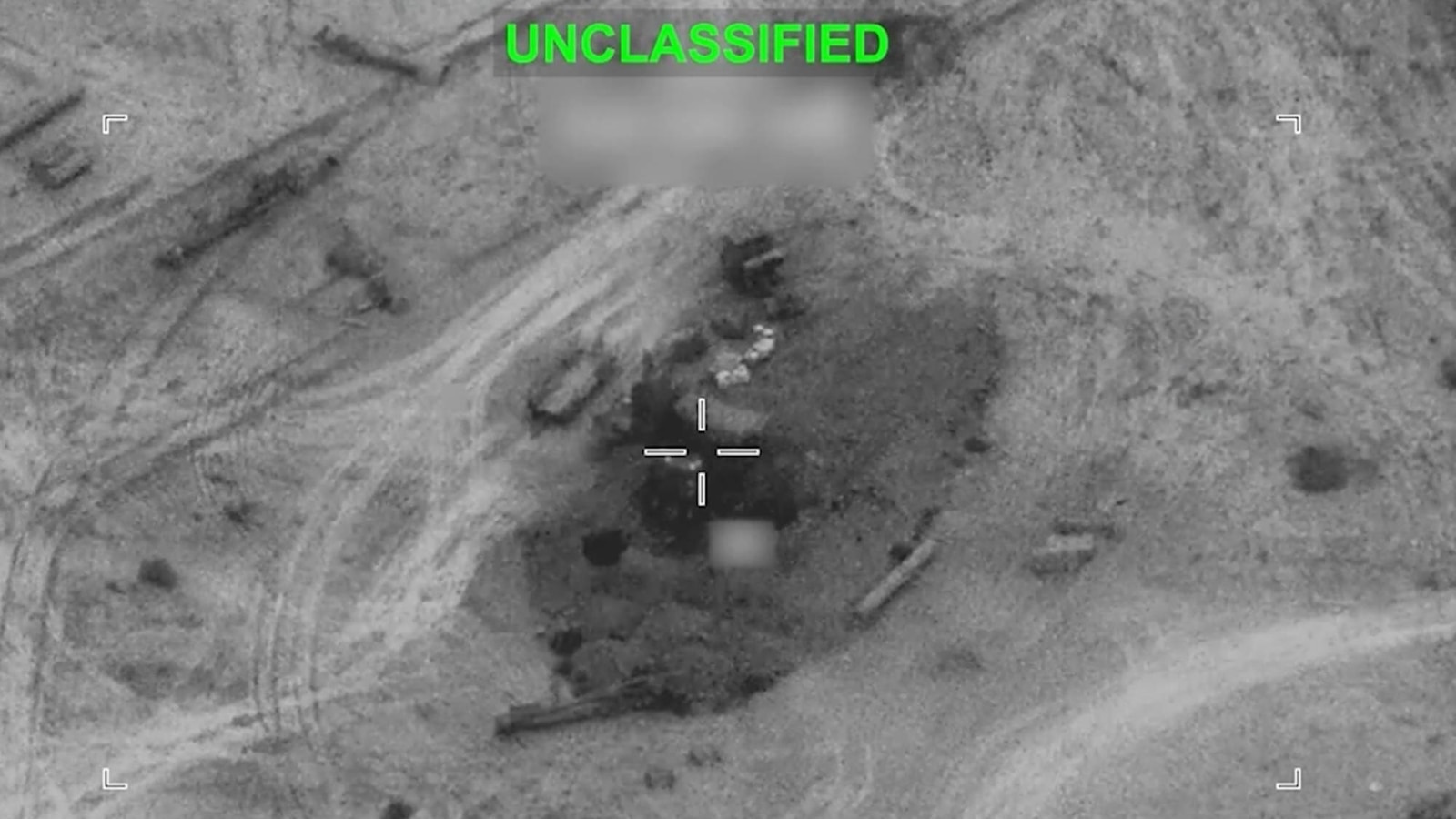
The US conducted a new round of strikes on Iranian targets on Sunday, a US official told ABC News. The targets included Iranian air defense systems and IRGC small boats around the Strait of Hormuz. The strikes were intended to degrade Iran’s ability to target commercial shipping, and no US troops were wounded. The fresh salvo suggests a fourth wave or continuous strike posture against remaining Iranian military infrastructure after CENTCOM declared the third round complete.
CENTCOM: “Iran does not control the Strait of Hormuz” — refutes IRGC commander claim on vessel tracking
Oman summons Iranian ambassador over 'irresponsible' drone attacks
UAE denounces Iran attacks; pledges solidarity with neighbouring nations
Oman says 23 seafarers rescued from attacked cargo ship in Hormuz
US embassy warns Americans to ‘shelter in place’ in Oman after Iran attacks
UAE says missiles 'detected outside its borders' — no strikes on its territory
Saudi Arabia denounces Iran's 'destabilising behaviour'
Iran and Pakistan foreign ministers discuss de-escalation
Jordan confirms three Iranian missiles landed on its territory at dawn
US airstrikes hit outskirts of Iran's Veysian
US attack hit military base in Iran's Khondab
Iran's army says US must comply with MoU terms
Sirens blare in Bahrain again as Iran intensifies retaliation
Iran claims 'heavy attack' on Oman's Duqm
Explosion reported in Kerman, southern Iran
IRGC video claims drone strikes on US sites in Kuwait
IRGC says it stopped second vessel in Hormuz, struck Al Udeid base in Qatar
Qatar raises security threat level, urges people to stay home
Abu Musa island targeted in expanded third wave
Kish Island warplanes; widespread blasts across southern Iran
Bushehr ground footage
90 Iranian targets hit
Chabahar port strikes
Additional strikes — Jul 8
Bandar Abbas airstrike
Shahid Haqqani Port
Powerful strikes begin
Shahid Raahbar strike
Chabahar control tower strike
~90 targets overnight
Trump live-posts strike videos
Third wave begins — Jul 11
“Iran made a poor choice. Now they pay.”
Strike on fishing boats in Bushehr
Three injured, including child, by falling debris from interception operations
Military facility in Iran's Yasuj hit in US strikes
Iranian official says Iran has 'taken control of Hormuz with power'
Oman condemns Iran's attacks on Musandam Governorate
Kuwait condemns Iranian attack calling it “a highly dangerous escalation”
India condemns attack on GFS Galaxy; 1 missing, 10 Indian crew rescued
Qatar condemns Iranian attacks as a threat to regional security, international law
Qatar advises all vessel owners to cease maritime activities until further notice
Qatar strongly condemns latest Iranian attacks on its territory and regional countries
Jordan condemns 'brutal' Iranian attacks on Gulf neighbours
Overnight US air strikes kill another Iranian soldier as death toll rises
Iran’s PGSA says Strait of Hormuz will reopen when ‘stability and calm are restored’
Iran warns “no action against Iran should go unanswered” amid fourth wave of US strikes
Iranian Deputy Foreign Minister Kazem Gharibabadi released a statement following the fourth wave of US strikes, saying no action against Iran should go unanswered. FM spokesperson called US/Israeli attacks “a blatant and unprovoked act of aggression” and defended Iran’s counterstrikes as “legitimate self-defense.”
US aircraft shoot down Iranian cruise missile and drone targeting commercial shipping in Hormuz
Iranian forces fired on commercial vessels in the Strait of Hormuz while US forces were conducting the fourth wave of strikes against Iran. US aircraft shot down an Iranian cruise missile and a one-way attack drone targeting the vessels, a US official told ABC News.
Oil opens higher Monday — Brent at $78.96, WTI at $74.33 as Hormuz standoff continues

Oil prices jumped Monday as US-Iran tit-for-tat strikes escalated. Brent crude rose 3.88% to $78.96/bbl. US gasoline averaged $3.87/gal nationally per AAA.
US strikes hit two locations near Ahvaz and Andimeshk in Khuzestan oil province

Explosions in Jask, Sirik, Qeshm, Bandar Abbas — telecom tower hit, no civilian casualties
Two explosions heard in Khondab, Markazi province — deputy governor says enemy projectiles landed
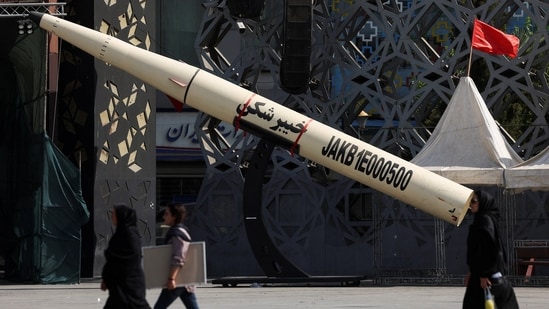
US strike on Mahshahr water pumping station kills security guard, wounds four in Khuzestan
IRGC claims it struck US bases at Prince Hassan (Jordan), Sheikh Isa (Bahrain), Ali Al Salem (Kuwait)
CENTCOM completes another wave of strikes against Iran — uses one-way attack sea drones for first time
US Central Command said it completed a new wave of offensive strikes against Iran, hitting dozens of targets across multiple locations. For the first time, CENTCOM used one-way attack sea drones (unmanned surface vessels). Targets included air-defense systems, coastal radar sites, missile and drone capabilities, and IRGC small boats.
At least two powerful explosions in Bandar Abbas; US strikes expand to Behbahan, Dezful, Abadan, Khorramshahr
Two powerful explosions reported in Bandar Abbas, with Iranian media listing expanded strike targets across Khuzestan province including Behbahan, Dezful, Abadan and Khorramshahr — the widest geographic range of US strikes to date.
IRGC claims “eye-for-an-eye” phase 3: fuel tanks, Patriot systems at Kuwait’s Ali Al-Salem and Ahmed Al-Jaber destroyed
Bahrain activates air raid sirens for second time as IRGC claims continued strikes on US 5th Fleet host nation
Iran’s army says “destructive drone” assaults against US bases in Kuwait continuing
IRGC navy claims it halted two “violating” vessels in Strait of Hormuz, disabled ships’ systems
Iran FM Baghaei: Tehran seeks Omani mediation for Hormuz mechanism, rejects IAEA access to bombed nuclear sites
Bahrain military says it thwarted Iranian missile/drone attacks, accuses Tehran of “systematically targeting civilians”
US missiles hit three locations in Abadan, Khuzestan — at least 2 killed, 3 wounded
IRGC navy fires warning shots at two ships attempting to transit Strait of Hormuz
UK proscribes Iran’s IRGC as terrorist organisation — membership now a criminal offence
Home Secretary Shabana Mahmood designated the IRGC as a threat to national security under new anti-state threat powers, making it a criminal offence to belong to the group or carry its logo in public. A second Iran-linked group was also outlawed over antisemitic attacks in Britain. The move follows years of UK debate on proscribing the elite military force.
Iran’s London embassy announces “temporary safe & secure maritime corridor” through Hormuz, claims MoU compliance
Iran’s UK embassy announced a “temporary safe and secure maritime corridor” through the Strait of Hormuz, saying it was “in compliance with” the June 17 MoU and that it had notified the UN IMO. The embassy accused the US of pushing vessels toward a “dangerous southern route” — the same passage Iranian forces struck last week. The announcement contradicts IRGC statements that the strait remains closed.
CENTCOM releases video of forces carrying out latest wave of strikes on Iran
US Central Command released video footage of US forces carrying out another wave of strikes on Iran, showing precision munitions hitting military targets including air-defense systems and coastal radar sites around the Strait of Hormuz.
Iran says it will not permit IAEA inspections of nuclear sites bombed in 2025
Iran military warns US against intervening in Hormuz, says US forces transiting without authorization will be “strongly confronted”
Iran’s top joint military command declared it would “strongly confront” any US military transit of the Strait of Hormuz without Iranian authorization. It warned Gulf states that cooperating with Washington in the waterway would be considered “war against Iran.” The statement directly challenges Trump’s claim that the US will “run” the strait.
CENTCOM reveals sea drones struck submarine and ship maintenance facility at Bandar Abbas Naval Base
US Central Command said three Corsair unmanned surface vessels struck the port at Bandar Abbas Naval Base, marking the first combat use of sea drones. CENTCOM released video of a USV approaching a dock structure holding a submarine before detonating.
Qatar condemns Iranian strikes on Jordan, Bahrain and Kuwait as “unjustified attacks” — calls for de-escalation
Qatar’s foreign ministry stressed the need to spare the region the consequences of “these unjustified attacks” and called for dialogue. Qatar and Pakistan are lead mediators between Iran and the US.
France’s Barrot: no sanctions relief without nuclear renunciation
French Foreign Minister Jean-Noël Barrot told BFM TV Monday that France will not support lifting sanctions on Iran unless Tehran abandons its nuclear programme. Barrot said neither side had an interest in renewed fighting and called for a return to diplomacy.
US strikes reported in Sistan and Baluchestan province — significant geographic expansion into eastern Iran
Semiofficial Iranian media reported US strikes in the eastern Sistan and Baluchestan province on the Gulf of Oman coast, according to AP. The province borders Pakistan and Afghanistan and represents a major expansion of the US campaign far from the Hormuz coastal zone.
Iran FM Araghchi says Iran-Oman talks on managing Strait of Hormuz to continue at political and technical levels
Iran’s foreign minister posted on Instagram that he briefly visited Muscat to meet Omani counterpart al-Bousaidi to discuss managing the Strait. Talks will continue despite Iran having struck Omani infrastructure days earlier, killing an expatriate worker.